

How to Build a Website for a Makeup Artist in 11 Simple Steps
TL;DR
A makeup artist’s website doesn’t need to be complicated. With a clear portfolio, simple content, and easy contact options, you can build an online presence that supports your business and helps attract the right clients.
Makeup artistry is a visual profession, and in the world of professional makeup, your talent doesn’t just speak, it performs. Clients don’t come to you based on a promise; they choose you because you have a specific aesthetic, a flawless blend, and the confidence you radiate.
While a thriving Instagram feed or a steady stream of word-of-mouth referrals can build a foundation, they often hit a ceiling. When clients first hear your name, their first instinct is to search for you. If that search does not lead to a brand website, they can lose the impact you created with your social media posts.
This is where a website helps. A website is a dedicated space to help potential clients understand who you are, what you offer, and how to book you. This guide explains how to build a website for a makeup artist step by step, in a way that is simple, practical, and beginner-friendly.
Why Does a Makeup Artist Need a Website?
Why can’t I stop stressing about this? Because social media is useful, but it’s not always enough. Posts disappear, algorithms change, and profiles can feel crowded. A website, on the other hand, gives you full control over how your work is presented.
When someone visits your website, they’re focused only on you. They can see your portfolio, read about your services, and contact you without any difficulties. A website also makes you appear more professional and reliable, especially for bridal clients, event booking, and long-term collaborations.
Think of your website as your online studio, clean, organised, and designed to showcase your best work.
What Makes a Good Makeup Artist Website?
A good makeup artist website doesn’t need to be complicated or fancy. It only needs to perform a few important tasks to be effective.
The site should showcase your best work, list your services, share your background, and provide a clear way for clients to reach you. If a visitor can understand your style and how to book an appointment within a minute or two, your website is doing its job. Your website is a digital business card that works for you 24/7.
Step 1: Decide What You Want Your Website to Do
Before building anything, be clear about your goal. Do you want clients to book bridal makeup, enquire about party makeup, or contact you for collaborations?
Most makeup artist websites have one main purpose. It is to turn visitors into enquiries. Keeping this in mind will help you avoid adding unnecessary pages or content later.
Step 2: Choose a Simple Way to Build Your Website
Creating a website is far more approachable now than it once was. You can build one by describing your business to an AI, or by choosing a ready-made template and updating the content with your own details.
You can choose to go with a vibe coding platform rather than choosing a website builder, as it is a more friendly option.
They help generate a website quickly based on a short description of your business.
Here are a few options you can choose from to build your website :
Just prompt your website
Clone the design from an already existing website
Replicate from the images/screenshots/Figma designs
Start with an already existing template from the gallery.
Step 3: Pick a Clean, Beauty-Focused Layout
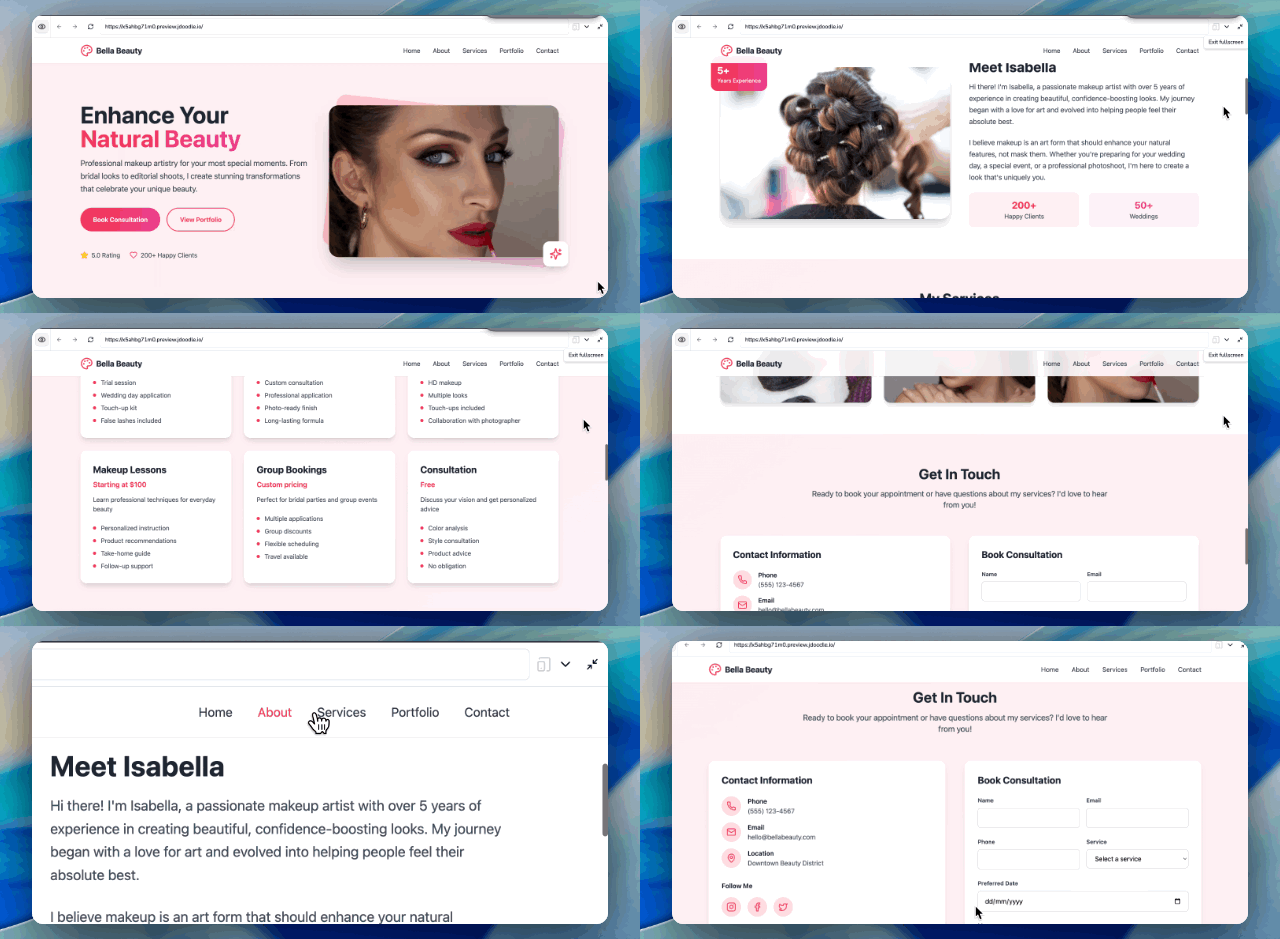
Your website layout should reflect your work and expertise. Choose a design that feels clean, elegant, and uncluttered. White space, soft colours, and large image sections work especially well for makeup artists.
Avoid layouts that feel crowded or distracting. Your makeup work should always be the main focus.
Here is a website I created with a simple prompt :
Step 4: Write a Clear and Friendly Homepage
Your homepage is often the first page people see. It should quickly answer three questions:
- What do you do?
- Who is it for?
- How can someone contact you?
Use simple, friendly language. You don’t need complicated descriptions. Write the way you would speak to a new client during a consultation, calm, confident, and approachable.
Step 5: Create a Strong Portfolio Section
Your portfolio is the heart of your website. This is where potential clients decide whether your style matches what they’re looking for.
Choose clear, high-quality images that represent your best work. Group them logically, such as bridal makeup, party looks, editorial work, or natural makeup. You don’t need dozens of photos. Quality matters more than quantity.
Step 6: List Your Makeup Services Clearly
A services section helps clients understand exactly what you offer. This could include bridal makeup, party makeup, engagement looks, photoshoot makeup, or on-location services.
Write short descriptions for each service using simple language. This reduces confusion and saves time when clients contact you.
Step 7: Add an “About You” Section That Feels Personal
Clients often want to know who will be working with them. An “About” section helps build trust.
Share how long you’ve been a makeup artist, what kind of work you enjoy, or what inspires your style. Keep it genuine and conversational. You don’t need to impress, just be real.
Step 8: Make It Easy for Clients to Contact You
Your contact section should contain information that is easy to access. Make sure that your clients don’t have to search for email address, phone number or address..
Many makeup artists lose enquiries simply because visitors don’t know how to reach them quickly.
CTA → Start Your Makeup Artist Website Today
A simple website can help clients discover your work and contact you with confidence.
Step 9: Ensure Your Website Works Well on Mobile
Most people will view your website on their phone. This means images should load properly, text should be readable, and buttons should be easy to tap.
A mobile-friendly website will improve user experience and help your site perform better in search results.
Step 10: Include Location and Availability Information
If you work in specific cities or areas, mention them clearly. This helps local clients find you and understand whether you travel for bookings.
Adding this information also helps your website appear in local searches.
Step 11: Publish First, Improve Later
Many makeup artists delay launching their website because they want everything to be perfect. The truth is, your website can grow with you.
Start with the basics. You can always add more photos, update services, or refine content over time.
Common Mistakes Makeup Artists Make With Websites
One common mistake is relying only on social media links instead of a dedicated website. Another is overcrowding the site with too much text or too many images.
A simple, well-organised website is far more effective than a complicated one.
How Long Does It Take to Build a Makeup Artist Website?
A basic website can be created in a few hours or over a weekend. Most of the time goes into selecting photos and writing content, not the actual setup.
How Much Does It Cost to Build a Makeup Artist Website?
Website costs vary depending on the tool you choose, but building a simple website today is far more affordable than it used to be. Compared to repeated advertising, a website often becomes a long-term investment.
Final Thoughts: Your Website Is Your Digital Portfolio
A website gives your makeup work a permanent home online. It helps potential clients see your style, understand your services, and contact you with confidence.
Once it’s set up, it continues to work for you, introducing your work to new people while you focus on your craft.
FAQs
Do makeup artists really need a website?
Yes. A website builds trust and gives clients a clear place to view your work and contact you.
What should a makeup artist’s website include?
A homepage, portfolio, services, about section, and contact details.
Can I build a makeup artist website without technical skills?
Yes. Modern tools make it possible to build a website without coding.
Should I still use social media if I have a website?
Yes. Social media can support your website, but your website should be the main reference point.
Related Posts
View All Posts »
How to Build a Website for a Makeup Artist in 11 Simple Steps
Learn how to build a clean makeup artist website that showcases your portfolio, lists services clearly, and helps clients book you easily, without needing technical skills.

How to Build a Website for a Gardener in 11 Simple Steps
Learn how to create a simple, professional gardening website that attracts local customers, showcases your work, and makes it easy to get enquiries, without needing technical skills.

How to Build Your SaaS MVP with an AI App Builder in 2026
A practical, step by step guide for founders, PMs, marketers, students, and indie hackers to ship a working SaaS MVP using an AI app builder with a built in database, without touching backend code or wrangling classic no code tools.